
Michigan Death Records
Michigan death records date back to 1867, when the state first required the registration of deaths under Public Act 194. The Michigan Department of Health and Human Services maintains these records statewide, and each of the 83 county clerks issues certified copies locally. Whether you need a death certificate for a legal matter, an estate, or genealogy research, this guide explains how to search Michigan death records, which offices to contact, what you can expect to pay, and where to find free historical databases for older records.
Michigan Death Records at a Glance
Where Michigan Death Records Are Kept
Michigan death records exist at two levels: the state office and the county clerk. The state-level office is the Michigan Department of Health and Human Services (MDHHS), Division for Vital Records and Health Statistics (DVRHS). It holds death records from 1867 to the present. Their mailing address is P.O. Box 30721, Lansing, MI 48909. The physical office is at 333 S. Grand Avenue, Lansing. You can reach them by phone at (517) 335-8666. In-person visits require an appointment and are only held on Tuesdays and Thursdays from 10:00 AM to 2:00 PM. A drop box is available on weekdays from 7:00 AM to 5:30 PM for mail-in orders.
The county clerk is usually the fastest option. All 83 Michigan counties have a clerk who keeps local death records and can issue certified copies on the same day you walk in. Most counties charge $15 for the first copy and $5 for each additional copy ordered at the same time. The state charges $34 for the first copy and $16 for each additional. If speed matters, the county clerk wins every time.
Under Michigan law, death certificates are public records. MCL 333.2882 states that anyone can request a certified copy of a Michigan death record. No relationship to the deceased is required. There is no application to fill out and no reason to give. This open access is one of the things that makes Michigan death records especially useful for genealogy and legal work alike.
The MDHHS Vital Records page at michigan.gov/mdhhs/doing-business/vitalrecords is the official starting point for state-level orders. It links to the VitalChek online ordering portal, lists fees, and explains the mail-in process.
The MDHHS Vital Records main page shows all available services and links to ordering options.
Michigan MDHHS Vital Records portal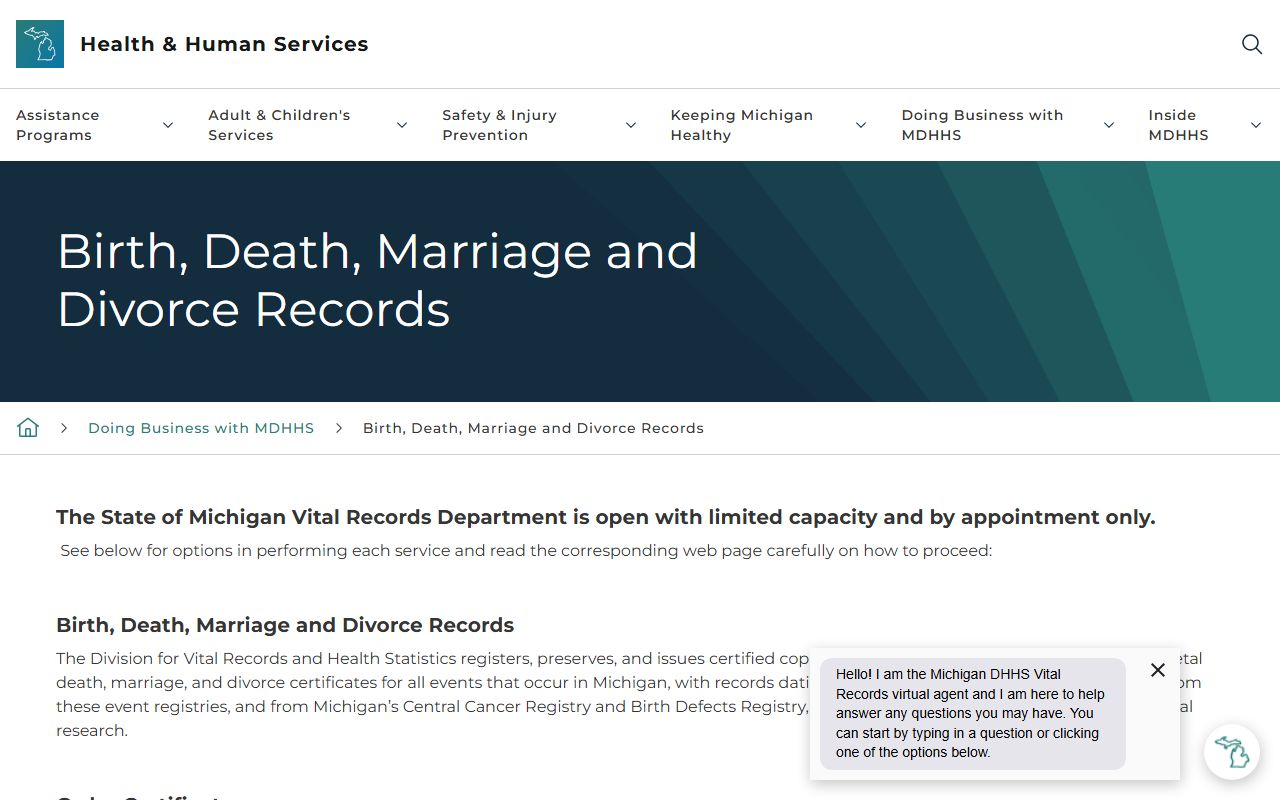
This page is maintained by the state and updated regularly with current fees and processing times.
Search Michigan Death Records Online
Michigan has two major free databases for death records, plus an authorized online ordering service for recent certificates. Each one covers a different time range and serves a different purpose.
GENDIS (Genealogical Death Indexing System) is the free state-sponsored database for historical Michigan death records from 1867 through 1897. It holds over 460,000 entries and was funded through the Abrams Foundation and built by volunteer genealogists from societies across the state. You can search by the deceased's name, the father's last name, or the year of death. The most common surnames in the database are Smith (6,181 records), Johnson (3,423), and Brown (2,794). Common given names for men include John (23,574), William (13,236), and George (9,104). For women, Mary leads with 23,859 entries, followed by Sarah (6,315) and Elizabeth (6,030). About 75 percent of people in the database were born in the United States. Access is free at vitalstats.michigan.gov.
The GENDIS search system is the go-to resource for pre-1897 Michigan death records.
GENDIS Genealogical Death Indexing System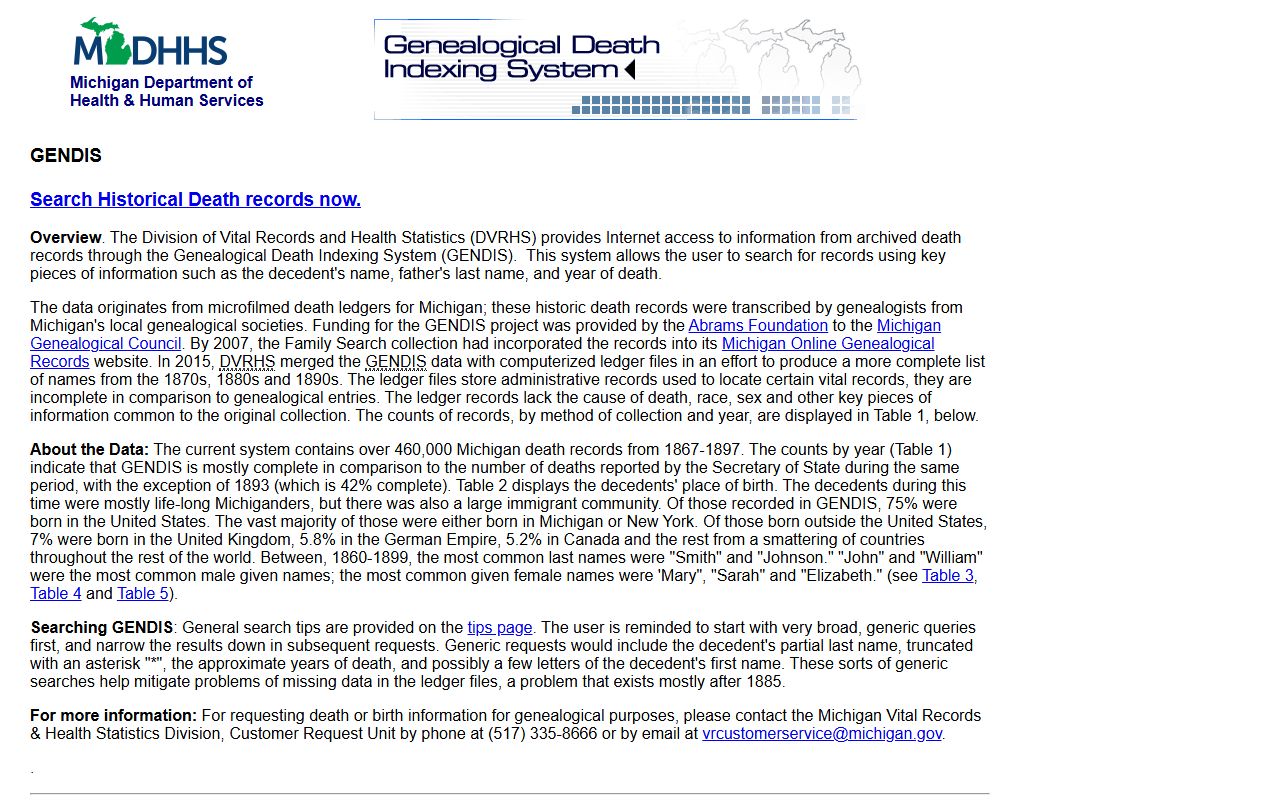
The database covers 1867 to 1897 and is fully searchable by name and year at no cost.
Michiganology, found at michiganology.org/vital-records, covers Michigan death certificates from 1897 through 1952. This site is a partnership with the Archives of Michigan. For any record more than 75 years old, you can view the actual scanned certificate image for free. This is one of the most useful genealogy tools the state offers. You can see the cause of death, the attending physician, the informant, and more. More recent records are indexed but images are not yet available.
Michiganology provides free death certificate images for records 75 or more years old.
Michiganology Vital Records Database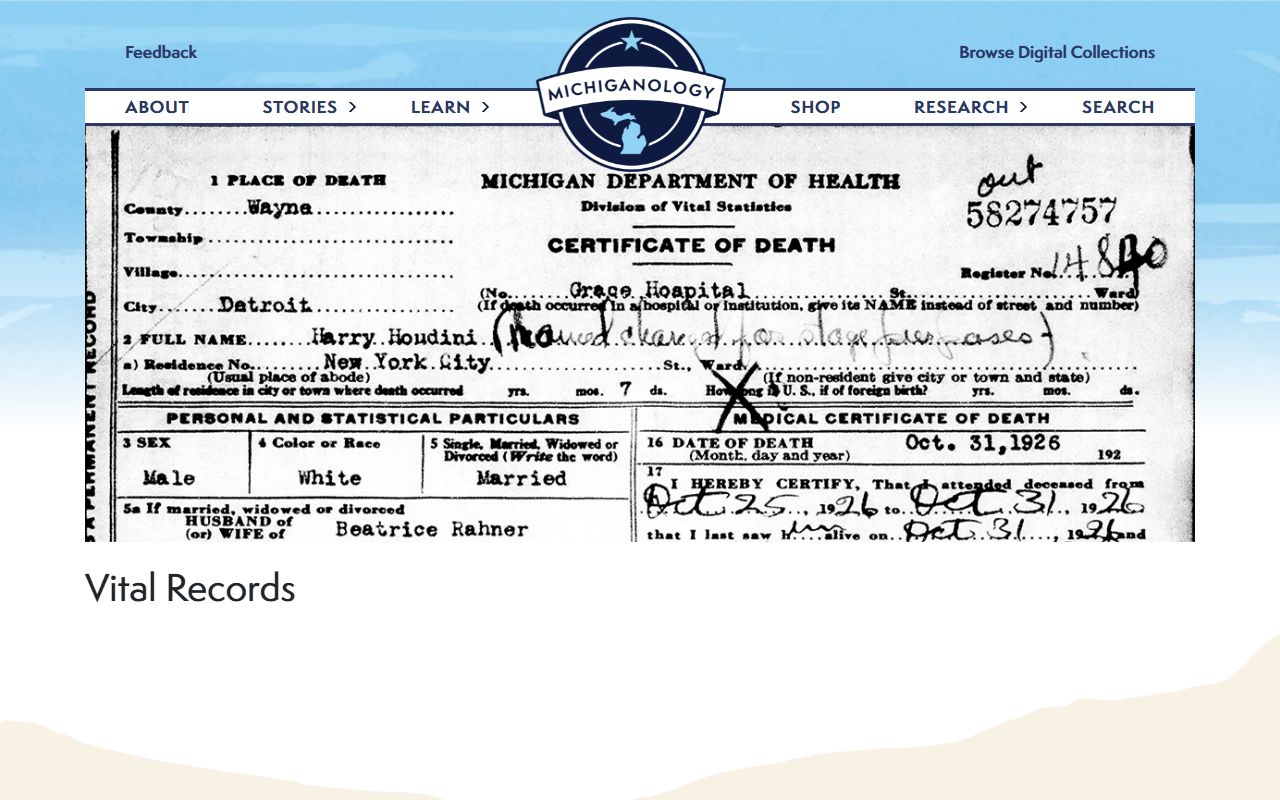
This free tool is ideal for researchers looking at Michigan deaths from 1897 through the mid-20th century.
For death certificates issued after 1952, you need to order from a county clerk or the state office. VitalChek is the only authorized online vendor for MDHHS. Standard processing is 21 to 45 business days. Rapid delivery cuts that to 1 to 5 business days but costs more. VitalChek can be reached at 866-443-9897 or through the state ordering page.
Getting Michigan Death Records at the County Level
County clerk offices are the most accessible source for Michigan death certificates. Walk-in service at the county level typically gets you a certified copy the same day. Mail requests to counties usually take three to seven business days, compared to four to five weeks when you order from the state. Most counties accept cash, checks, and money orders. A few also take credit cards.
To request a Michigan death certificate at any county clerk, you will need to provide the full name of the deceased, the date of death or the approximate year, the city and county where the death occurred, your name and contact information, and payment of the required fee. You do not need to prove any relationship to the deceased. Under MCL 333.2895, only certified copies are issued from county offices. Original documents are not open to public inspection.
Fee ranges vary more than you might expect. Most Michigan counties charge $15 for the first copy and $5 for each additional copy of the same record in the same order. Some counties charge more. Ingham County charges $30 for the first copy and $15 for each additional. Wayne County charges $24 for the first copy and $7 for each additional. The state office charges $34 for the first copy. Oakland County, at $15 and $5, is one of the better values for in-person service.
Note: County fees are set locally and can change. Always call ahead or check the county clerk's website to confirm current rates before submitting a mail request.
Michigan Death Records from 1867 to 1897
Michigan's first vital records law, Public Act 194, took effect in 1867. It required cities and townships to register annual births and deaths. Not every death was recorded in those early years, especially in rural areas and for infants. Still, the state built a significant archive. The 1869 Public Act 125 added columns for race to the records. Public Act 217 of 1897 introduced the first formal death certificate requirement, mandating signatures from the attending physician and the funeral director. This change in 1897 is why records before that year look different from later ones.
The GENDIS database at the Michigan Department of Health covers the 1867 to 1897 period. More information about how the system works and what it contains is available on the GENDIS information page.
GENDIS information page at MDHHS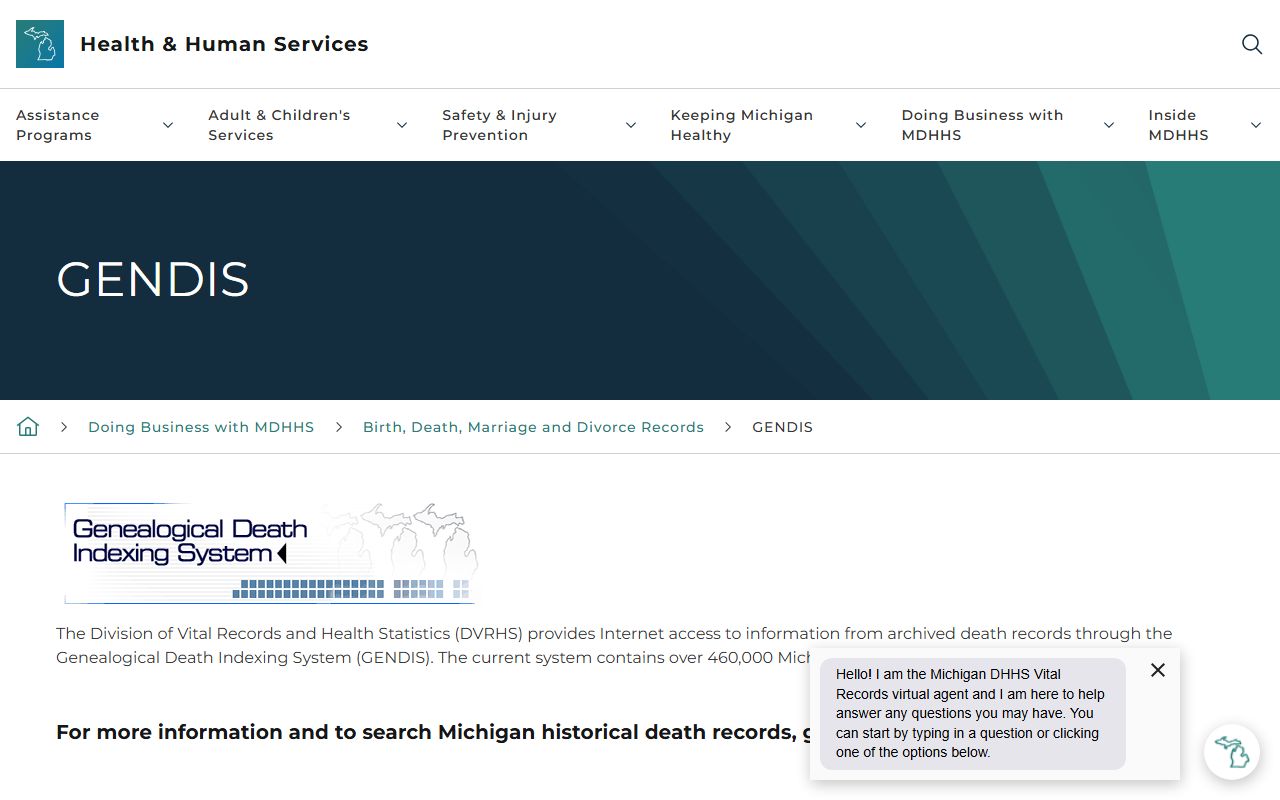
This page explains what GENDIS contains, how it was built, and how to use it for genealogy research.
FamilySearch also has several free Michigan death record collections. These include Michigan Deaths 1867-1897 (with images), Michigan Death Certificates 1921-1952 (index), Michigan Deaths and Burials 1800-1995 (index), and Michigan Mortality Schedules 1850-1880. Ancestry.com holds additional collections including Michigan Death Records 1867-1952 and the Michigan Deaths and Burials Index 1867-1995.
Research at the Library of Michigan
The Library of Michigan in Lansing is another strong resource for vital records research, particularly for genealogists. It holds microfilmed death records and indexes that complement the online databases. You can visit in person or use their online finding aids to plan your research. The library's vital records resources page explains what collections they hold and how to access them.
The Library of Michigan offers guides for researching death records and other vital records in the state's collections.
Library of Michigan vital records research page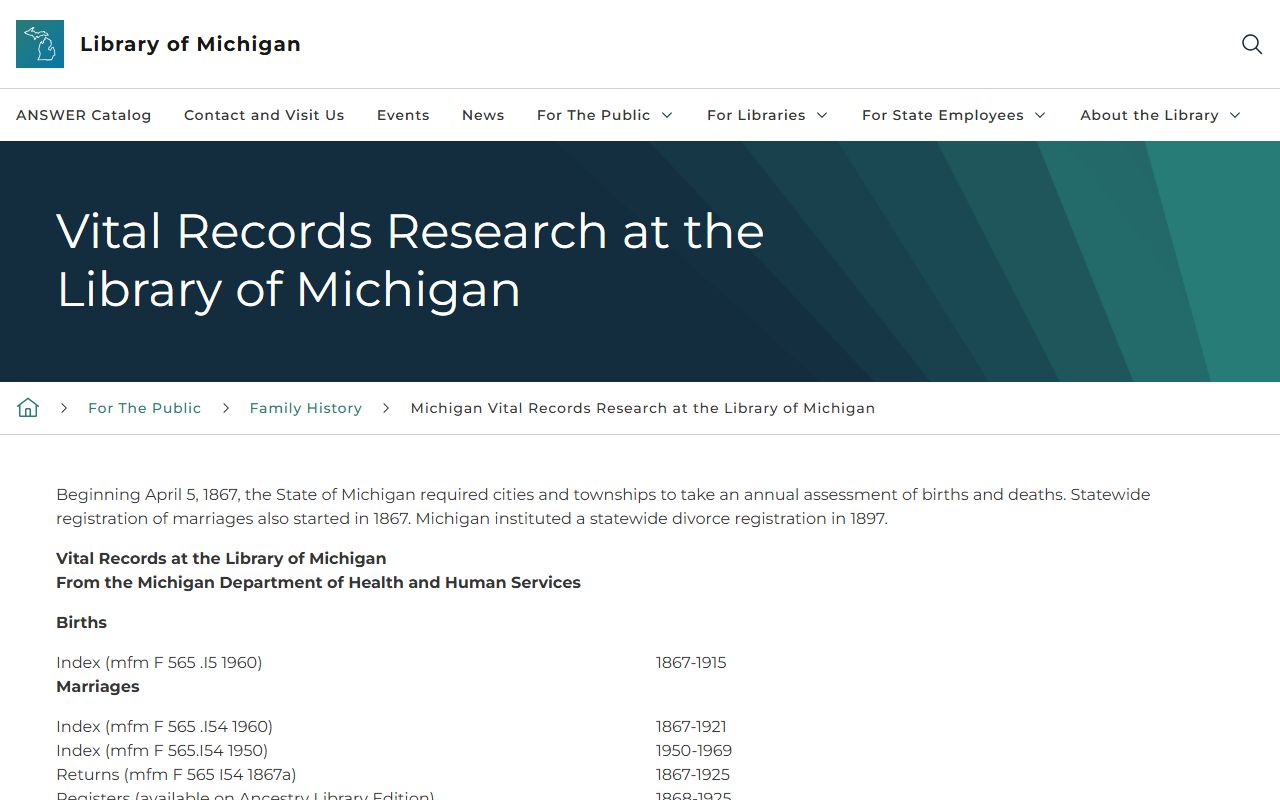
This page lists the collections available and provides guidance for in-person and remote research.
Vital records in Michigan are not subject to the Freedom of Information Act. MCL 333.2888(1) specifically exempts vital records from FOIA provisions. This means requests are handled under the state's public health code rules rather than the standard FOIA process. For most people requesting a death certificate, this distinction does not matter in practice. Access is still open under MCL 333.2882.
Order Michigan Death Records Online
VitalChek is the state-authorized online ordering service for Michigan death certificates. It is the only vendor officially approved by MDHHS for online orders.
The online ordering page walks you through the process of submitting a request and paying securely.
Order Michigan death records online through the MDHHS portal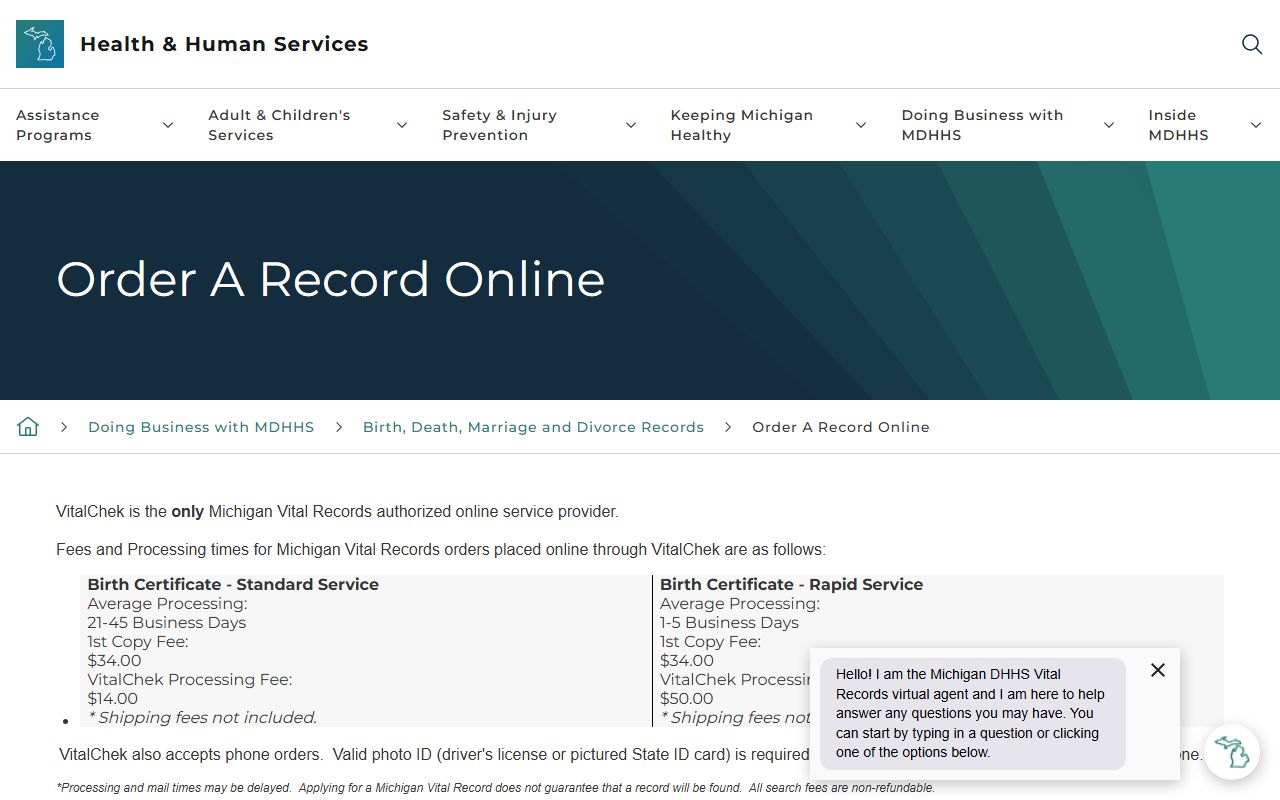
Processing fees apply in addition to the state's copy fee, and delivery times vary by order type.
Fees for online state orders are $34 for the first copy and $16 for each additional copy of the same record. Add a $12 rush fee if you need rapid processing. The Apostille service, which certifies documents for use in foreign countries, costs $1 per document and requires a certified copy first. For the apostille, contact the Michigan Department of State Office of the Great Seal at 7064 Crowner Drive, Lansing, MI 48918.
Payment at the state level is accepted by personal check, money order, cashier's check, or credit card (online and phone orders through VitalChek only). Make checks payable to "State of Michigan."
Note: If you are unsure of the exact date of death, the state can search using approximate dates. Contact customer service at vrcustomerservice@michigan.gov for guidance on multi-year searches.
What Michigan Death Records Contain
A standard Michigan death certificate holds a significant amount of personal and medical information. The record shows the full legal name of the deceased, the date and exact location of death, and the cause of death. It also includes age at death, sex, race, marital status at time of death, occupation, birth date and birthplace, father's name, and mother's maiden name.
The certificate also identifies the informant who provided the information, the attending physician or medical examiner who certified the cause of death, and the funeral home that handled final arrangements. Records from 1897 onward are generally complete with all of these fields. Records from 1867 to 1897 have a different format and may lack some details. Some deaths in rural areas before 1897 were never recorded at all, so gaps exist in the early years.
To search or request a Michigan death record, you will need:
- Full name of the deceased at time of death
- Date of death or approximate year
- City and county where the death occurred
- Sex of the deceased
- Place of birth, if known
- Your name and contact information
Michigan Death Records for Genealogy Research
Michigan is an excellent state for genealogy because of its early and consistent vital records program. Statewide registration began in 1867, earlier than many states. The state also put significant effort into digitizing and indexing these older records through partnerships with genealogical organizations.
The Michiganology site is the main gateway for free death certificate research from 1897 through the 1950s. This site is built on the Archives of Michigan's collections and includes a search tool that covers both index data and certificate images.
Michiganology main page and genealogy resources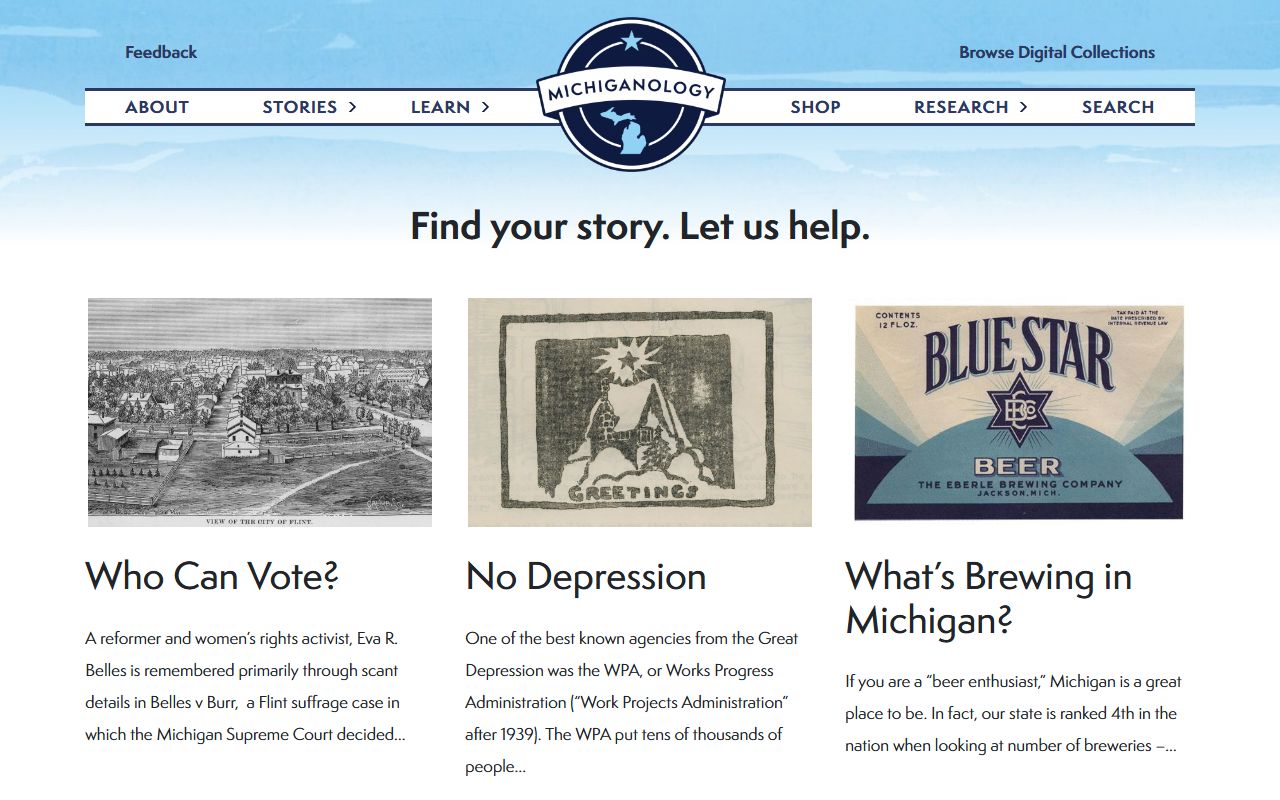
Beyond death records, Michiganology includes other vital records and historical documents useful for family history research.
For researchers using third-party platforms, FamilySearch offers free access to several Michigan death record collections. Ancestry.com has additional records, including the Michigan Death Records 1867-1952 collection with images. The Michigan Resident Death Files (MRDF) is a state database containing demographic and cause of death information for all Michigan residents going back to 1897. This file is managed by MDHHS and is primarily used for public health research.
Browse Michigan Death Records by County
Each of Michigan's 83 counties has a clerk's office that keeps death records and issues certified copies. Select a county below to find local contact details, fees, and resources for death records in that area.
Michigan Death Records by City
Residents of Michigan's largest cities file death certificates through their county clerk's office. Select a city to find out which office handles death records for that area and how to get a certified copy.